WhatsApp Conversational Chatbots not only address the cold lead conundrum but also redefine your customer engagement strategies in the age of AI.
Imagine a world where your sales outreach is not just a message sent but a dynamic, personalized conversation tailored to the unique needs and preferences of each lead.
It wouldn’t be possible until chatbots evolved into conversational AI and became mainstream.
In essence, the entry of WhatsApp Conversational Chatbots into the sales arena signifies a shift towards more immediate, interactive, and personalized communication. This innovative approach not only addresses the challenges posed by cold leads but also opens up new avenues for businesses to redefine their customer engagement strategies in the age of AI.
This blog delves into the transformative power of WhatsApp conversational chatbots in reviving cold lead engagement. We’ll explore the limitations of traditional sales tactics, and the advantages of conversational chatbots, and address common concerns about chatbot implementation into existing sales processes.
The Cold Lead Conundrum
Cold leads are potential customers who have shown initial interest but have since become unresponsive or disengaged. This situation poses a significant hurdle for businesses as they strive to convert leads into loyal customers. The frustration lies in the fact that these leads, though initially intrigued, may have lost interest or simply fallen off the radar due to various reasons such as timing, lack of personalized engagement, or changing priorities.
One of the primary issues with cold leads is the difficulty in deciphering the reasons behind their disengagement. Traditional outreach methods often fall short in providing insights into the specific pain points or concerns that led to the leads going cold. Furthermore, conventional outreach methods, such as generic emails and cold calls, may contribute to a sense of intrusion rather than establishing a meaningful connection.
This lack of understanding of specific pain points hinders the ability of sales teams to tailor their approach effectively.
Hubspot survey reported that 80% of respondents view cold calling as a “distracting” or “annoying” sales tactic. Furthermore, a report by Litmus found that the average click-through rate for marketing emails across all industries is 2.7%.
Moreover, the longer a lead remains cold, the greater the likelihood it may opt for a competitor’s offering or lose interest in the product or service category altogether.
This is where the integration of AI, particularly in the form of WhatsApp Conversational Chatbots, emerges as a transformative solution. It offers the potential to address the intricacies of the cold lead conundrum with a personalized and dynamic approach.
Enter WhatsApp Conversational Chatbots
WhatsApp, as one of the most widely used messaging platforms globally, provides a fertile ground for businesses to establish direct and instant communication with their audience. Conversational Chatbots, powered by artificial intelligence (AI), elevate this interaction to a new level by enabling businesses to engage in personalized and real-time conversations with their customers.
WhatsApp Conversational Chatbots act as virtual assistants that are capable of understanding user queries, providing information, and even executing specific tasks – all within the familiar and user-friendly interface of WhatsApp.
This integration of AI into messaging platforms introduces a conversational element that goes beyond traditional methods of communication. It allows businesses to offer a more human-like and interactive experience, meeting the expectations of modern consumers who seek convenience and instant gratification.

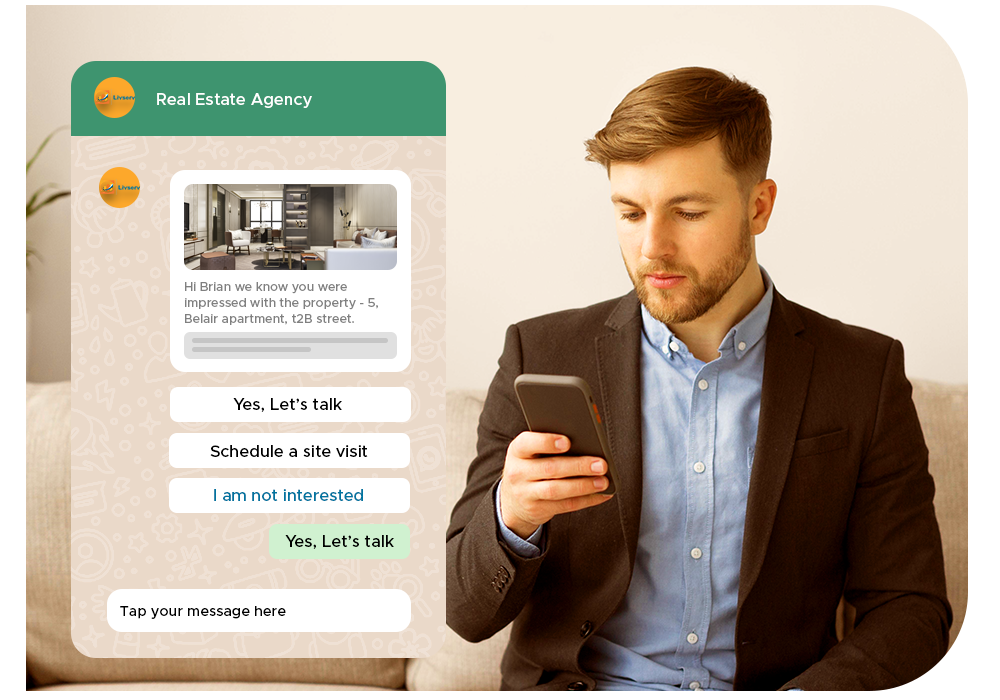
Figure 1: WhatsApp Conversational Chatbot, Powered by Livserv.ai
The significance of WhatsApp as a platform for Conversational Chatbots lies in its widespread adoption and the comfort it provides to users. With billions of active users, WhatsApp serves as a communication hub for personal and professional interactions. This ubiquity positions it as an ideal channel for businesses to connect with their audience in a place where they are already engaged.
Furthermore, the personal nature of WhatsApp makes it conducive to fostering a sense of intimacy and trust in customer interactions. Conversational Chatbots on this platform have the capability to tailor responses based on user behavior, preferences, and past interactions. This level of personalization not only enhances the user experience but also contributes to breaking through the noise and capturing the attention of users who may have disengaged in more traditional outreach channels.
The Art of Reselling: Strategies with WhatsApp Chatbots
With WhatsApp Conversational Chatbots as a powerful tool, the art of reselling takes on a new dimension, offering businesses innovative strategies to reconnect with cold leads and breathe life into seemingly dormant sales opportunities.
Crafting Compelling Reengagement Messages:
Reselling begins with a captivating message that reignites the interest of cold leads. WhatsApp Conversational Chatbots allow businesses to craft personalized and attention-grabbing messages based on user behavior and past interactions. These messages can go beyond generic sales pitches, addressing specific concerns, or highlighting new features that align with the lead’s previous engagement.
| Sample Template for WhatsApp Messaging ???? Hey [Lead’s Name]! It’s [Your Name] from [Your Company]! We’ve missed you. ???? We have curated a personalized recommendation based on your past preferences. ???? Ready to be amazed? ???? Exclusive Offer: To sweeten the deal, here’s an exclusive [X]% off on your next purchase. Use code: [DISCOUNT CODE]. ????️ Don’t miss out! Got questions or need assistance? We are here 24/7 to help! Just type your question, and we’ll provide instant answers. ???? Explore More: Check out what’s new on our website: [Insert Website Link]. Discover exciting products/services that you’ll love. Can’t wait to hear from you! Feel free to reply here for a seamless experience. ???? |
Leveraging Personalized Content and Offers:
One of the key elements of successful reselling is the ability to tailor content and offers to the unique needs and preferences of each lead. WhatsApp Chatbots can dynamically present product recommendations, exclusive discounts, or relevant content, creating a personalized experience that resonates with the individual lead. This level of customization not only captures attention but also increases the likelihood of conversion.
Timing is Key: Using Chatbots to Reach Leads at the Right Moments:
Reselling efforts are most effective when timed strategically. WhatsApp Conversational Chatbots can be programmed to engage leads at optimal moments, such as during product launches, promotions, or when the lead is likely to be most receptive. This real-time responsiveness enhances the chances of catching the lead’s attention when they are actively considering a purchase decision.
Nurturing Leads Through Automated Conversations
The art of reselling extends beyond one-time interactions. WhatsApp Chatbots enable businesses to set up automated nurturing sequences, guiding leads through a series of conversations that gradually build trust and address their specific needs. These automated interactions serve as virtual sales assistants, providing information, answering queries, and gently nudging the lead toward a purchasing decision.
Case Studies: Success Stories with WhatsApp Chatbots
Highlighting success stories and case studies can be a powerful strategy in the art of reselling. Showcase instances where WhatsApp Conversational Chatbots played a pivotal role in re-engaging cold leads and driving successful conversions. Real-world examples add credibility and demonstrate the tangible impact of integrating chatbots into the reselling process.
8-Point Checklist for Implementing WhatsApp Conversational Chatbots
Implementing WhatsApp Conversational Chatbots for re-engaging cold leads requires a strategic approach to ensure seamless integration and optimal performance. Here are key implementation tips to guide your efforts:
| Choose the Right Conversational Chatbot | Integration with Existing Systems |
| Define Clear Objectives and Workflows | Ensure Compliance and Data Security |
| Test and Iterate | Provide Clear CTAs and Next Steps |
| Monitor and Analyze Performance | Continuous Improvement |
I. Choose the Right Conversational Chatbot:
Select a Chatbot platform that aligns with your business needs and integrates smoothly with WhatsApp. Consider factors such as customization capabilities, natural language processing, and scalability. Ensure that the chosen Chatbot platform supports dynamic conversations tailored to your sales objectives.
II. Integration with Existing Systems:
Seamless integration with your existing Customer Relationship Management (CRM) system is crucial for a unified and efficient sales process. Ensure that data captured by the Chatbot seamlessly flows into your CRM, providing a comprehensive view of each lead’s interactions and preferences.
III. Define Clear Objectives and Workflows:
Clearly define the objectives of your WhatsApp Conversational Chatbot. Whether it’s lead re-engagement, product recommendations, or answering FAQs, establish specific workflows to guide user interactions. Map out the conversational flow to ensure a logical and user-friendly experience.
IV. Ensure Compliance and Data Security:
Prioritize compliance with data protection regulations and user privacy. Clearly communicate to users how their data will be used and stored. Implement security measures to safeguard sensitive information and ensure that your Chatbot adheres to industry standards.
V. Test and Iterate:
Before launching the Chatbot for cold lead re-engagement, conduct thorough testing to identify and address potential issues. Test various user scenarios to ensure the Chatbot responds accurately and provides a positive user experience. Regularly iterate based on user feedback and performance analytics.
VI. Provide Clear CTAs and Next Steps:
Craft clear and compelling Calls-to-Action (CTAs) within the Chatbot conversations. Guide users toward the next steps, whether it’s making a purchase, exploring more content, or contacting a sales representative. Ensure that the user journey seamlessly aligns with your sales objectives.
VII. Monitor and Analyze Performance:
Implement analytics tools to monitor the performance of your WhatsApp Conversational Chatbot. Track user interactions, conversion rates, and user satisfaction. Analyze data to identify trends, refine your Chatbot’s responses, and optimize the overall user experience.
VIII. Continuous Improvement:
Treat the implementation of WhatsApp Conversational Chatbots as an ongoing process. Regularly update and enhance the Chatbot’s capabilities based on user feedback, changes in products or services, and emerging trends in AI technology. Continuous improvement ensures that your Chatbot remains effective in re-engaging cold leads over time.
Visit this page to understand the success rate of implementing Livserv’s WhatsApp conversational chatbots. We have facilitated successful results for companies in real estate, healthcare, and education industries.
Sign up here for a free trial or talk to our sales representative to learn more about our WhatsApp conversational chatbot.
Comment down below if you liked what you read!